Storage of lyophilised peptides: why the powder doesn't need a cold chain in transit, but needs refrigeration after receipt
Lyophilised powder vs. ready-to-use solution (pen): why form matters. How peptides degrade (hydrolysis, oxidation, deamidation, aggregation), why lyophilisation stabilises them and makes them resistant in transit, what 2–8°C means in practice after receipt, how to store them after reconstitution, and how to check a vial on arrival.
Every PEPTIQUE box carries three icons: a snowflake (2–8°C), a crossed-out sun (protect from light) and a document (research use only). The first two are stability instructions, and behind them lies precise chemistry: peptides are molecules that degrade, and the rate of degradation depends on temperature, light, humidity and pH.
This guide explains how peptides degrade, why lyophilisation protects them, what the cold chain actually means, and how to store a vial from receipt through to the last draw.
1. How a peptide degrades
The stability literature (Manning et al., Pharmaceutical Research, 2010; Cleland et al., 1993) describes four main pathways:
- Hydrolysis. Water breaks the peptide bond, particularly near aspartic acid residues. It produces shorter fragments, visible on HPLC as new peaks with a lower retention time.
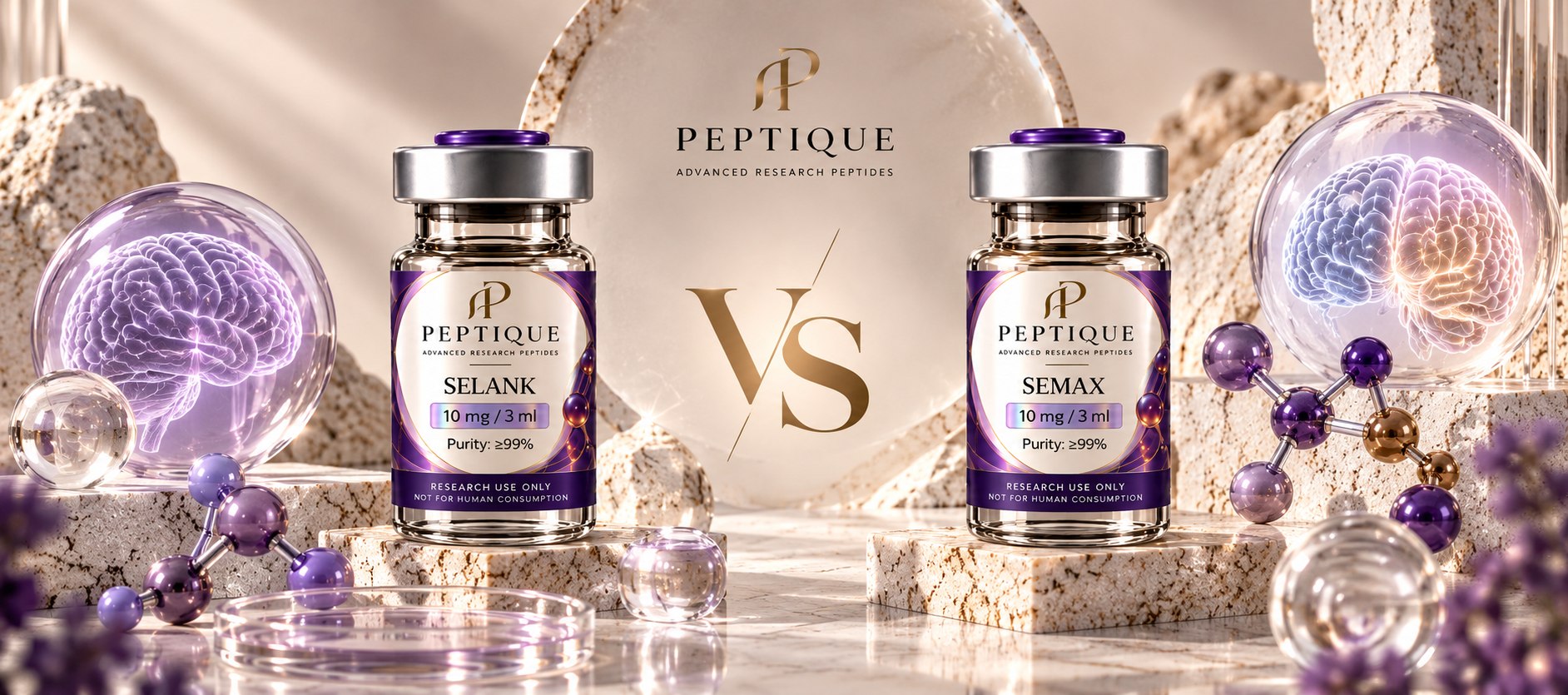
- Oxidation. Methionine, cysteine, tryptophan and histidine react with oxygen, especially in the presence of light and trace metals. Semax, with methionine at position 1, is the example in the PEPTIQUE catalogue. On a mass spectrum, oxidation shows up as +16 Da.
- Deamidation. Asparagine and glutamine lose their amide group and become aspartic or glutamic acid. The reaction is accelerated by neutral-to-alkaline pH and by temperature. On the spectrum, +1 Da.
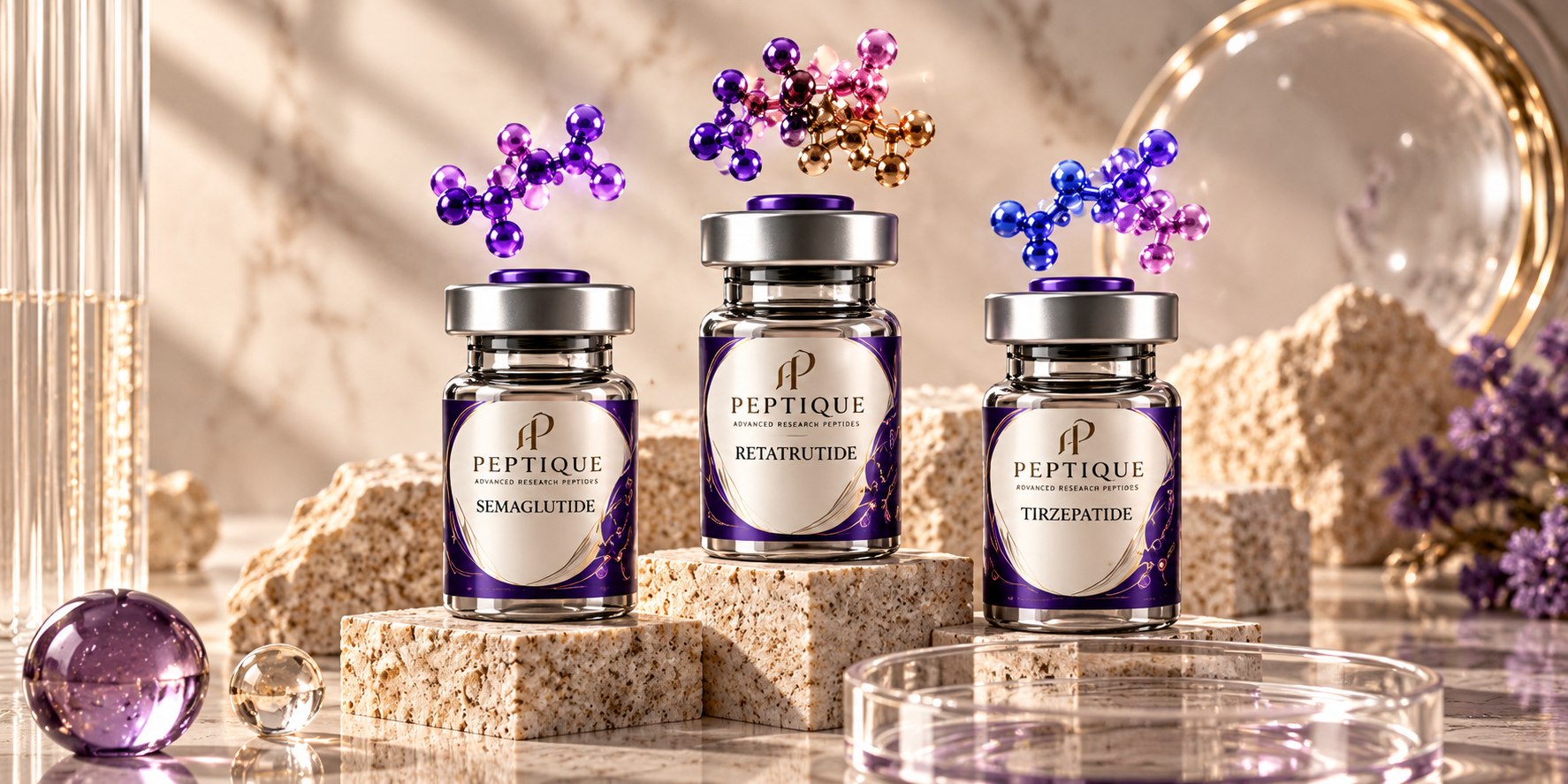
- Aggregation. Peptide chains physically associate into larger structures, sometimes visible as turbidity. It's favoured by high concentrations, mechanical agitation, freeze-thaw cycles and hydrophobic surfaces. Fatty-acid-chain peptides such as retatrutide, tirzepatide and semaglutide are especially prone to it.
All four share a common thread: they are chemical or physical reactions whose rate increases with temperature and, for the first three, require water.
2. Why lyophilisation stabilises
Lyophilisation removes water by sublimation, at low temperature and under vacuum (Wang, International Journal of Pharmaceutics, 2000). The resulting powder typically contains under 5% residual water. Without free water, hydrolysis and deamidation are nearly stopped, and molecular mobility drops so much that even oxidation slows dramatically (Lai and Topp, Journal of Pharmaceutical Sciences, 1999).
The result: a peptide that would degrade within weeks in solution stays stable for months or years as a lyophilised powder at 2–8°C. This is the form in which PEPTIQUE ships every peptide in its catalogue.
Lyophilised powder does have a vulnerability of its own: it's hygroscopic. It absorbs water from the air within seconds if the vial is open, or if the stopper is pierced before the vial has reached room temperature. Absorbed water restarts every reaction described above.
3. Lyophilised powder vs. ready-to-use solution: why form matters
The same peptide can exist in two forms: as lyophilised powder in a vial, or as a ready-to-use solution — for example, in the prefilled pens used in the pharmaceutical industry. Chemically, it's the same molecule. From a stability standpoint, they're two different worlds.
| Criterion | Lyophilised powder (vial) | Ready-to-use solution (pen, prefilled syringe) |
|---|---|---|
| Free water | under 5%, bound | 95%+, the medium for reactions |
| Hydrolysis and deamidation | nearly halted | ongoing, temperature-dependent |
| Oxidation | very slow | accelerated, especially in light |
| Aggregation | unlikely in the solid state | possible with agitation, freezing, heat |
| Transit tolerance | days–weeks at room temperature | hours; requires an unbroken cold chain |
| Long-term storage | 2–8°C, years | 2–8°C, months; weeks after opening |
| Consequence of heat exposure | usually negligible short-term | loss of purity, potentially irreversible |
| Flexibility | concentration chosen at reconstitution | fixed concentration |
Laboratory conclusion: lyophilised powder is the more stable form, more tolerant of transport and more flexible. Ready-to-use solution has a single advantage — convenience — paid for with total dependence on the cold chain. That's why research peptides ship lyophilised, with reconstitution done in the lab, as close as possible to the moment of use.
4. What 2–8°C means in practice
The 2–8°C range is the standard refrigeration range for temperature-sensitive products, as defined in the WHO guidance on storage and transport (WHO TRS 961, Annex 9, 2011). The lower limit protects against accidental freezing, which causes aggregation in solutions; the upper limit keeps degradation reactions at their slowest.
Laboratory rules:
- A dedicated fridge or dedicated shelf, not the fridge door, where temperature swings with every opening.
- A min/max thermometer or a temperature logger. Without measurement, "2–8°C" is just an assumption.
- The original box stays on the vial. It protects against light and condensation.
- Lyophilised powder can also go to −20°C for long-term storage. Solutions can't, except portioned and only once.
5. Light: the quiet enemy
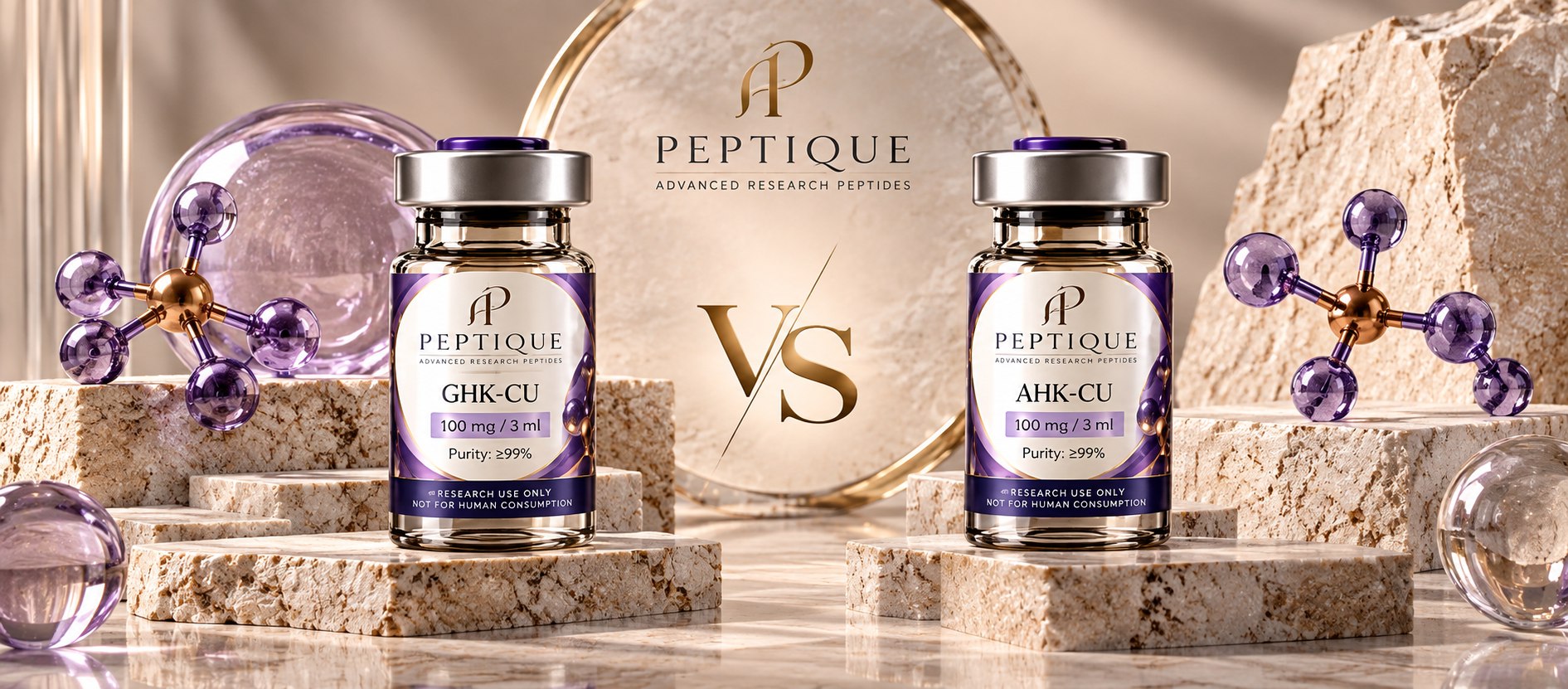
Photodegradation is less well known than thermal degradation, but well documented (Kerwin and Remmele, Journal of Pharmaceutical Sciences, 2007). UV radiation, and even intense visible light, generate reactive oxygen species that oxidise methionine, tryptophan, histidine and tyrosine. The GHK-Cu complex, because of its copper, is especially photosensitive.
Hence the crossed-out sun icon. In practice: the vial stays in its box, the box stays in the fridge, and solutions are handled away from windows and from the UV lamps in extraction hoods.
6. Transit: why the powder doesn't need a cold chain
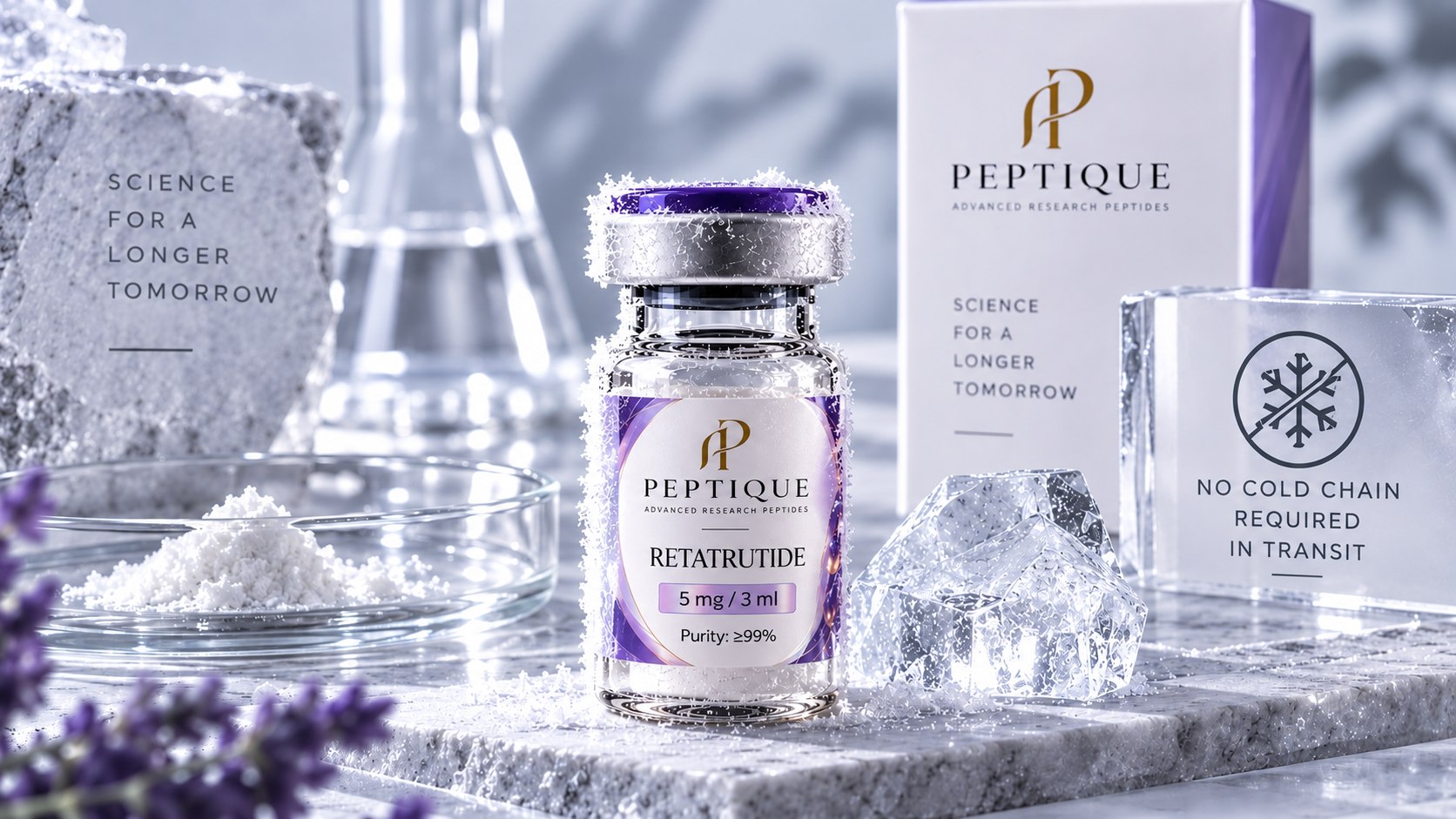
This is where the most common confusion comes from, kept alive by catalogues that promise "refrigerated shipping" for powders. The cold chain — keeping an unbroken 2–8°C from manufacturer to end user — is essential for solutions and for liquid biologics. For a lyophilised powder, it isn't.
The reason is the same one covered in sections 2 and 3: without free water, degradation reactions are nearly stopped. Solid-state stability data (Lai and Topp, 1999) show that lyophilised peptides tolerate days, even weeks, at room temperature with no measurable change in purity. That's precisely why they're lyophilised in the first place: so they can be shipped and stored without cold-chain infrastructure. The 2–8°C recommendation on the label is for long-term storage, where months matter — not for the 24–48 hours of a courier shipment.
What's actually harmful in transit:
- Extreme heat, above 40°C, for hours at a stretch: a parcel left in a car in the sun in summer.
- Humidity, if the vial isn't sealed properly: the powder absorbs water and degradation restarts.
- Strong mechanical shock, which can crack the vial or damage the stopper.
How PEPTIQUE handles it:
- Products stay refrigerated in the warehouse, at 2–8°C, until dispatch.
- Parcels go out by express courier, in packaging that protects against shock and light. Shipping from the warehouse in Romania, orders placed before 1:00pm arrive the next working day, so transit time is a single day.
- On arrival, vials go straight into the fridge. From that point, long-term storage is the lab's responsibility.
- Bacteriostatic water, the only liquid product in the catalogue, is not temperature-sensitive within the normal transit range.
A standard courier can't guarantee a cold chain, and PEPTIQUE doesn't promise one, because lyophilised powder doesn't need it. What we do promise is what actually matters: cold storage until dispatch, a short transit time, and batch-level traceability.
7. Checking the vial on arrival
When the parcel arrives, before putting the vials in the fridge:
- The box: intact, with a legible batch number, manufacture date and expiry date.
- The vial: undamaged stopper, intact seal, no cracks.
- The powder: white or near-white, compact or loose, uniform. For GHK-Cu, blue-violet. Powder that's yellow, brown, sticky, or melted at the bottom of the vial points to exposure to heat or humidity.
- The expiry date: in the future, with enough margin for the study's duration.
Photograph and report any discrepancy on WhatsApp with the batch number.
8. After reconstitution: storage rules
Once reconstituted, the peptide is back in water and every reaction from section 1 restarts. The rules:
- Refrigerate immediately, 2–8°C, away from light.
- Label with the peptide, concentration, reconstitution date, and operator.
- Portion into single-use volumes if the solution will be used over several weeks, or if it will be frozen.
- No freeze-thaw cycles. One cycle only, if the protocol calls for it, using separate portions.
- No shaking at each draw. Swirl gently instead.
- Use-by period set by the protocol and written on the label. Bacteriostatic water protects against bacteria, not against chemistry.
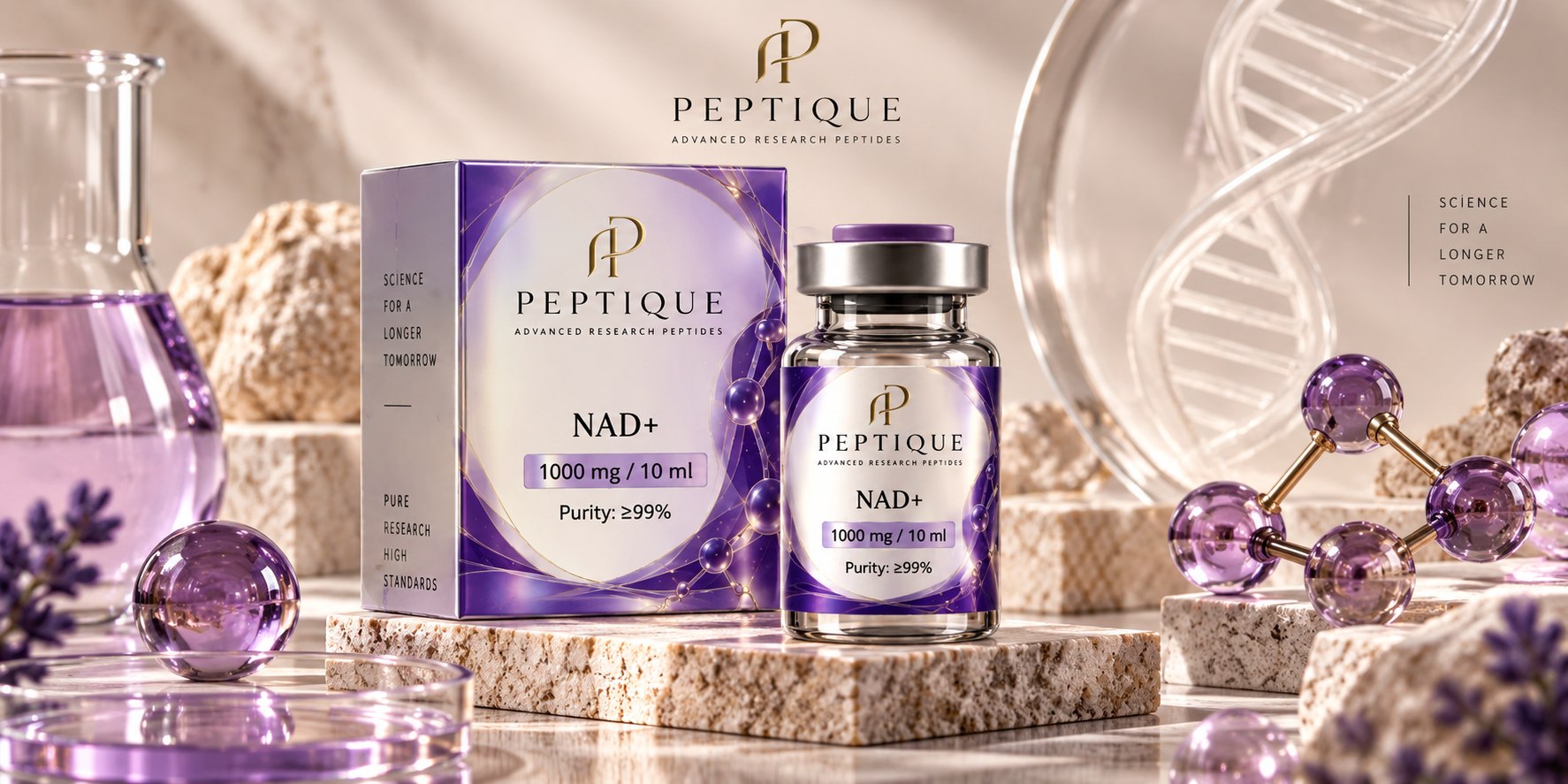
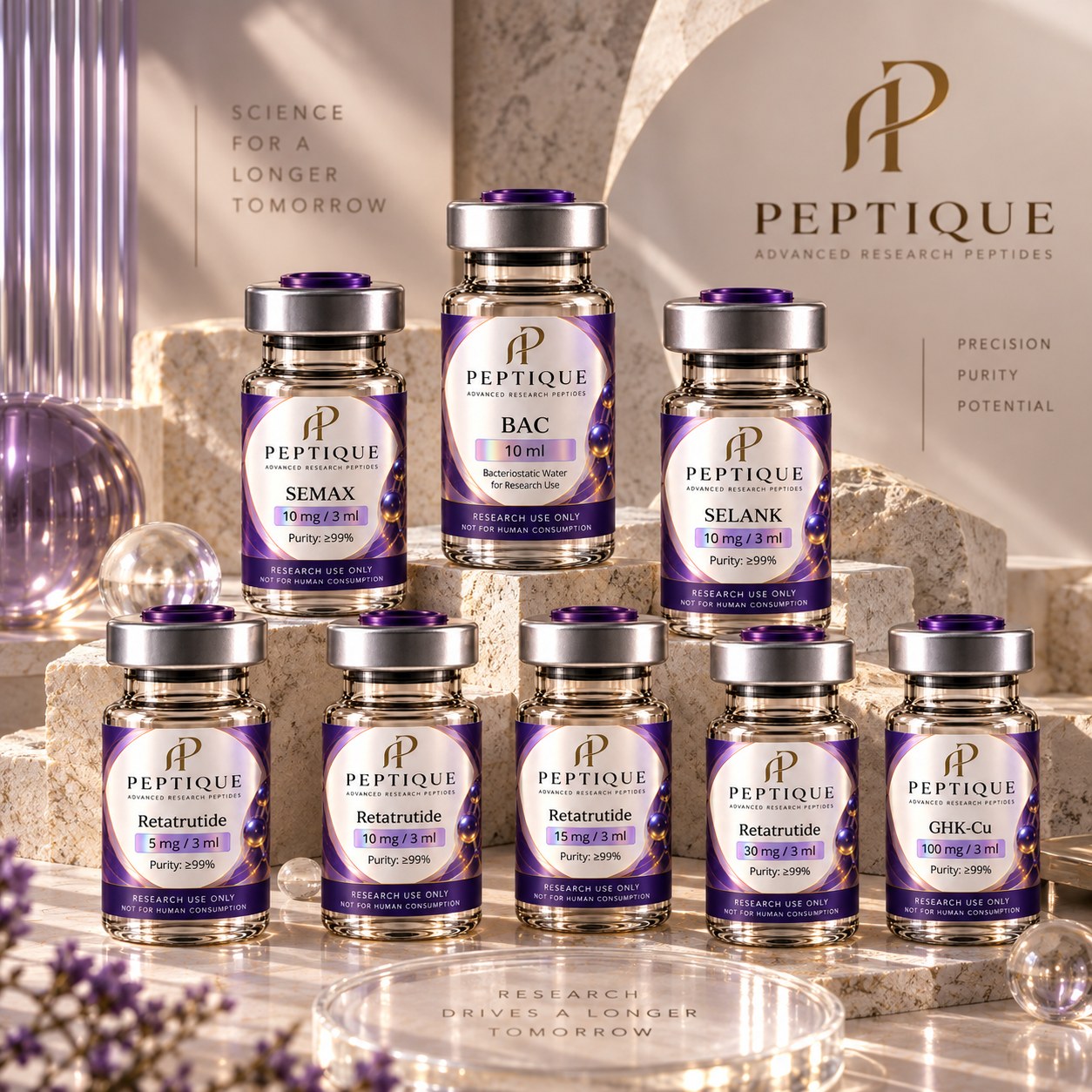
Catalogue peptides needing extra care: Semax (oxidisable methionine, portioning required), Retatrutide (fatty-acid chain, shear-sensitive), GHK-Cu (photosensitive, neutral pH), NAD+ (unstable at alkaline pH and under heat).
9. Table: storage conditions at a glance
| State | Temperature | Light | Approximate duration | Notes |
|---|---|---|---|---|
| Lyophilised powder, sealed | 2–8°C | protected | until expiry date | original box, dedicated fridge |
| Lyophilised powder, long-term | −20°C | protected | beyond expiry date not recommended | no condensation on removal |
| Solution reconstituted in bacteriostatic water | 2–8°C | protected | per protocol, typically days–weeks | labelled, no shaking |
| Portioned solution, frozen | −20°C or −80°C | protected | one cycle only | do not refreeze |
| Transit (lyophilised powder) | room temperature, no cold chain | protected | 1–2 days of shipping | stable; check on arrival |
10. Conclusion
A peptide's stability doesn't end when it leaves the lyophiliser. It continues in the fridge, in the syringe, and on the bench. In a delivery van, for a powder, it's the least of the concerns. The three icons on the PEPTIQUE box — the snowflake, the crossed-out sun and the document — sum up this article: cold, dark, for research.
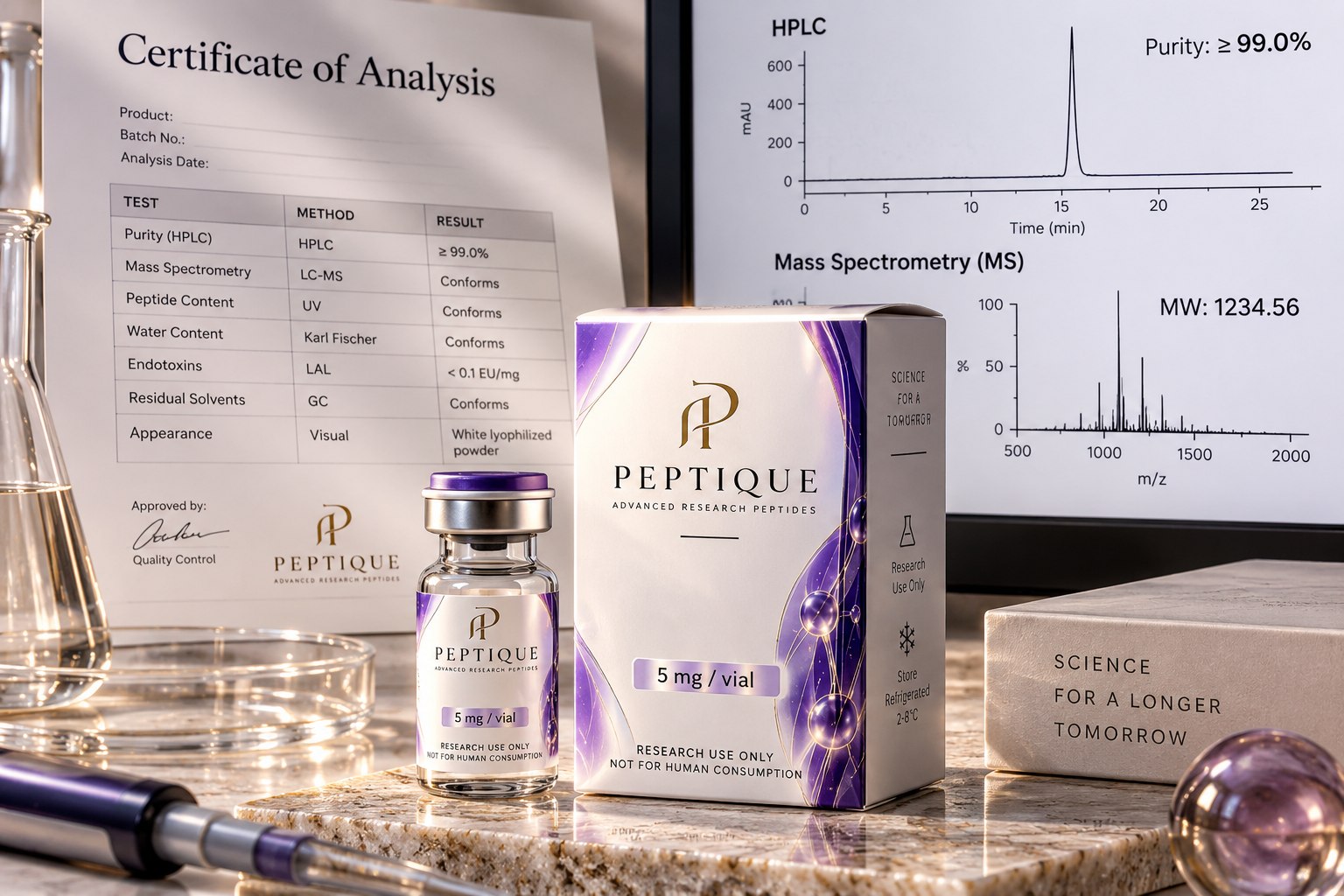
PEPTIQUE supplies lyophilised peptides with ≥99% purity, kept cold until dispatch, with batch number, manufacture date and expiry date on every vial. Research use only.
Frequently asked questions
Why are peptides stored at 2–8°C rather than at room temperature?
Can lyophilised peptide be frozen?
What's the difference between lyophilised powder and a ready-to-use pen?
Do peptides need a cold chain in transit?
How long does reconstituted solution remain usable?
References
- Manning MC, Chou DK, Murphy BM, Payne RW, Katayama DS. Stability of protein pharmaceuticals: an update. Pharm Res. 2010;27(4):544-575.
- Lai MC, Topp EM. Solid-state chemical stability of proteins and peptides. J Pharm Sci. 1999;88(5):489-500.
- Wang W. Lyophilization and development of solid protein pharmaceuticals. Int J Pharm. 2000;203(1-2):1-60.
- Cleland JL, Powell MF, Shire SJ. The development of stable protein formulations: a close look at protein aggregation, deamidation, and oxidation. Crit Rev Ther Drug Carrier Syst. 1993;10(4):307-377.
- Kerwin BA, Remmele RL. Protect from light: photodegradation and protein biologics. J Pharm Sci. 2007;96(6):1468-1479.
- World Health Organization. Model guidance for the storage and transport of time- and temperature-sensitive pharmaceutical products. WHO Technical Report Series 961, Annex 9; 2011.